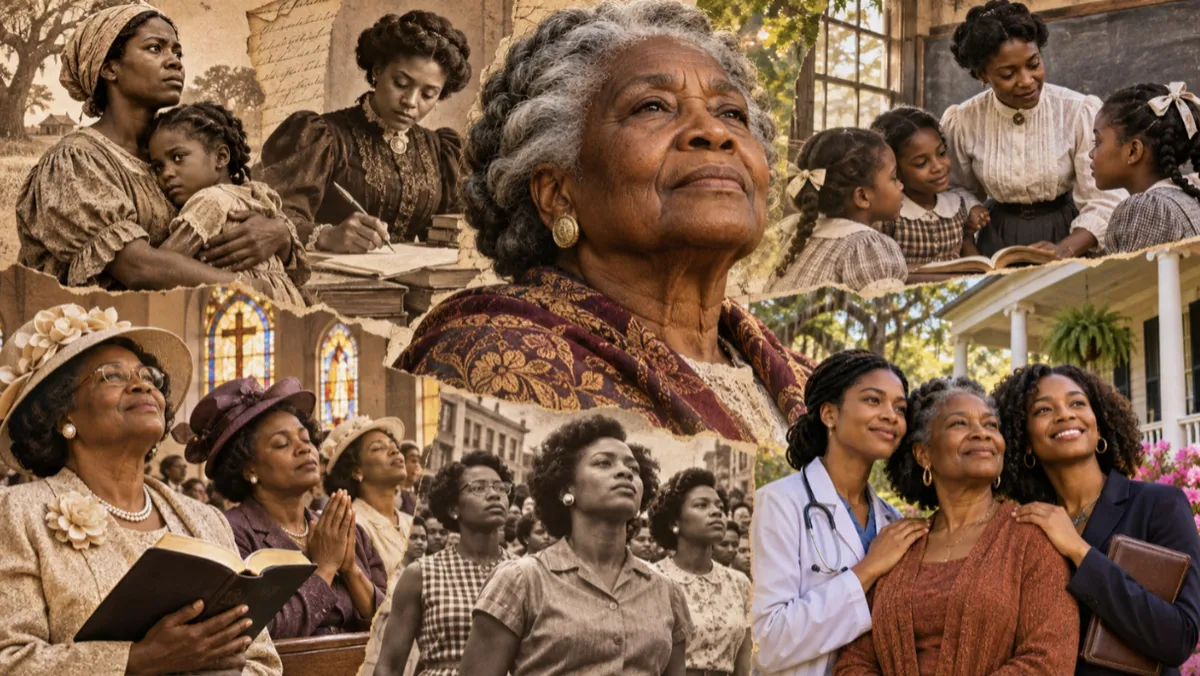
God’s Election and the Moral Matriarchy
This essay is adapted from my forthcoming book, My Story, His Glory: Covenant, Biblical Identity, the Tribe of Judah, and the Gathering of God’s People. It is a reflection on the faith, courage, and enduring dignity of African American women, whose lives, I believe, bear witness to the image of God and His sustaining presence in this land of our oppression.
Strong women—my mother and grandmother, my aunts and cousins—nurturing yet demanding, cautious yet courageous, always present, ever vigilant. I grew up surrounded by such women. As a boy, I felt both awe and, at times, fear in their presence, yet I never doubted their love and commitment to my well-being. They were Southern belles unbowed by generations of chattel slavery. They were not the exception; they were the rule.
As a child, I simply knew them as family. As a man, I came to understand that they were also survivors of a legacy unlike any other in American history. Reading Incidents in the Life of a Slave Girl, by Harriet Jacobs, shone light on the darkest chapter of American slavery. It shattered forever any romantic notions of the benevolent slave master. Jacobs' testimony exposed slavery not merely as forced labor, but as calculated psychological, sexual, and spiritual violence directed against Black womanhood itself. Her suffering was not unique. It was representative.
That realization deepened as I encountered the testimonies of other women preserved through the Federal Writers' Project Slave Narrative Collection. Those women spoke near the end of their lives, and their voices possessed a distinctive weight. They spoke of pregnancies forced upon them by violence, children sold away without warning, husbands from whom they were torn asunder, endless labor in the fields and in the master's house, and nights spent praying that Yah would somehow preserve them from their abusers and spare the lives of their families. Together, their testimonies strip away every myth of the "happy plantation." They reveal slavery through the eyes of those who endured it.
Negro. Colored. African American. Black. Whatever America chose to call them, these women were extraordinary. Like gold refined in the furnace, they did not merely survive America’s racism—they emerged bearing a blinding brilliance polished by their suffering. Their lives give profound meaning to the declaration in Genesis that humanity was created “in the image of God.” That image was assaulted, mocked, violated, bought, sold, and exploited, but it was never destroyed. Scripture leaves no ambiguity about the sacred identity of womanhood:
“So God created man in his own image, in the image of God created he him; male and female created he them.” (Genesis 1:27, KJV)
Before America called them Negro, Colored, slave, servant, breeder, or property, Yah had already called them the bearers of His image. No law, auction block, plantation ledger, or racial designation possessed the authority to revoke what the Creator had declared from the beginning. Yet, they still suffered.
Their suffering differed even from that of Black men—not because one suffered more than the other, but because women bore wounds that were uniquely their own.
The devil, working through the principality of white patriarchy—embodied in men who wore white skin but were animated by demonic spirits—invaded the sanctuary of the Black woman’s body. Countless women endured repeated sexual assault under a patriarchy that recognized neither their consent nor their humanity. They conceived children through violence, carried them within their wombs, endured the constant reminder of unspeakable abuse, brought those children into the world, nursed them at their breasts, and then watched as many were torn from their arms and sold to another enslaver animated by the same demonic spirit, there to repeat the cycle of trauma. Their own bodies became the ground upon which the institution of slavery sought to perpetuate itself from one generation to the next. Yet they did not surrender their humanity. That may be the greatest miracle of all.
The same women whom the plantation sought to reduce to breeders remained mothers. The same women whom evil attempted to dehumanize continued to embody the very image of God that the system could neither erase nor comprehend. After enduring degradation designed to strip them of dignity, they continued to love. They continued to nurture. They continued to sing. They continued to pray. They continued to marry when allowed, to comfort the grieving, to preserve family histories, and to pass down faith, recipes, songs, language, dignity, and hope. They taught generations of Black children that they possessed worth even when the surrounding culture declared they had none.
They were the moral backbone of a country without one—the unbreakable spine that built America’s exceptionalism. They enabled America to stand despite the atrocities it sanctified, the humanity it denied, and the hypocrisy it enshrined in law. While America proclaimed liberty, they lived in bondage. While America celebrated family, theirs were torn apart. While America professed Christianity, they endured the cruelty of men who invoked the name of Christ to justify their enslavement. Yet these women continued to embody the very virtues the nation claimed as its own—faith, sacrifice, perseverance, compassion, and an unwavering commitment to family. America did not become exceptional because it treated them exceptionally. It became exceptional, in no small measure, because of what they contributed despite how exceptionally cruelly it treated them.
Looking back now, I understand why I stood in awe of the women in my own family. They are Yah's chosen, His elect. Scripture repeatedly reveals that Yah delights in confounding the wisdom of the world by exalting those whom the world has despised. Mary Magdalene had once been a woman tormented, from whom Yēshúa cast seven demons (Luke 8:2; Mark 16:9). Yet after the crucifixion, when many had fled in fear, and others remained hidden behind locked doors, she remained steadfast in her devotion to the One who had set her free.
It was to her—not to kings, priests, or rulers, nor even first to the apostles—that the risen Messiah first revealed Himself (John 20:11–18). The world remembered her brokenness. Christ remembered her faithfulness. Her eyes became the first to behold the empty tomb, her feet were the first to carry the good news, and her voice became the first to proclaim, "I have seen the Lord."
As He selected Mary, I believe Yah has often entrusted His greatest treasures to women whom the world has underestimated. He saw in them what others refused to see. America measured them by race, gender, poverty, and oppression. Yah measured them by faith. While the world questioned their worth, He preserved within them the courage to nurture families, sustain communities, and keep alive the hope of a covenant people through generations of affliction.
The quiet strength I witnessed was not accidental. It had been forged across centuries of suffering and refined through generations of faith. What I saw in my mother, my grandmother, my aunts, and my cousins was not merely resilience. It was the enduring image of God, preserved through women whom America tried to break but whom Yah refused to abandon.
Childhood impressions often fade in the mature light of adulthood; instead, mine grew stronger. As a man, I married such a woman, Cassandra, and together we raised two daughters, both beautiful and strong, bold and compassionate. When I look across this land of broken dreams and bitter disappointments, I see millions of women cut from that same cloth—a sisterhood forged in suffering yet clothed in grace.
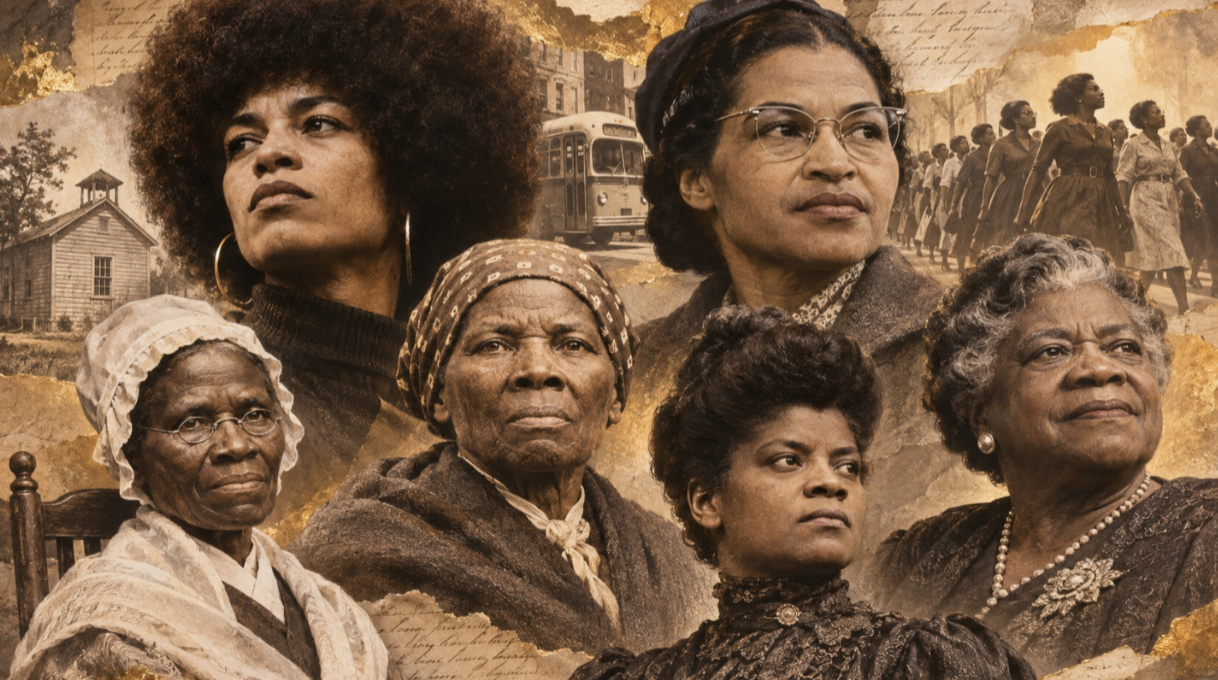
During the 2024 presidential election, 92 percent of African American women, according to national exit polls, voted for Kamala Harris and rejected the candidate whose rhetoric and public conduct revived the racial animus and misogyny of America’s past, awakening memories of a darker moral order. Theirs was, in many respects, the response of a moral matriarchy confronting not men themselves, but a form of patriarchy untethered from righteousness—one that measures greatness by dominance rather than sacrifice, power over justice, and covenant subservient to control. Their response was more than a political calculation. It reflected something far deeper: a moral awareness sharpened through generations of suffering. They had learned to recognize the predator long before others heard it howl.
These elder sisters knew better than to simply trust a smiling face, a polished speech, or a patriotic banner. They had learned that wolves seldom announce themselves as wolves. They come dressed as protectors, speaking the language of law and order, promising security through walls and borders, and offering greatness at the expense of justice. They had watched hatred masquerade as law, injustice parade as order, exploitation celebrated as prosperity, and oppression draped in the stars and stripes, calling itself patriotism. They knew, the fruit always reveals what the costume conceals and that lies, no matter how many times repeated, are still calculated deceit.
It was as though they could hear voices that others could not. Perhaps they did. The whispers of mothers who had buried children without eulogies. The prayers of grandmothers who survived Jim Crow. The sighs of great-grandmothers who endured the field and the lash. The cries of enslaved women whose bodies belonged to men they despised. This moral matriarchy blended its voice with the voices of all the women who had come before. They could not betray that sacred inheritance by surrendering their moral discernment to the very spirit their foremothers had resisted and overcome. Not again. Never again.
That, I believe, is yet another reflection of what it means to bear the image of God. The image of God is not merely the capacity to reason. It is the capacity to discern truth from falsehood, to strive when surrender was security, to discern righteousness from wickedness, justice from oppression—and, above all, to love when it is far easier to hate.
The irony is that American patriarchy always recognized this gift of Black womanhood, even as it refused to admit it. It entrusted its children to Black women, yet demeaned them while it did. It relied upon them to manage its households, nurse its infants, prepare its meals, sanctify its homes, and often offer counsel in moments of crisis, yet denied them the dignity due those made in the image of God.
It depended upon their wisdom while dismissing their intellect, drew strength from their labor while denying their humanity, and leaned upon their faith while scorning their personhood. America grew fat on the fruit of their character while refusing to acknowledge the tree that bore it.
America repeatedly sought to degrade them; Yah chose to preserve and elevate them. I believe the day will soon come when, through divine revelation, we will finally comprehend the magnitude of what we owe them. We owe them more than gratitude. We owe them our survival, our memory, our faith, and much of the moral conscience we still possess. The image of God did not merely survive in them. It shone through them into us!
Visit my blog at: www.hisglorypublishing.com for further insight.
Interviews and Discussions:
To have the author participate in small group discussions, interviews, and speaking engagements, please email us at: [email protected]
